Skip to content

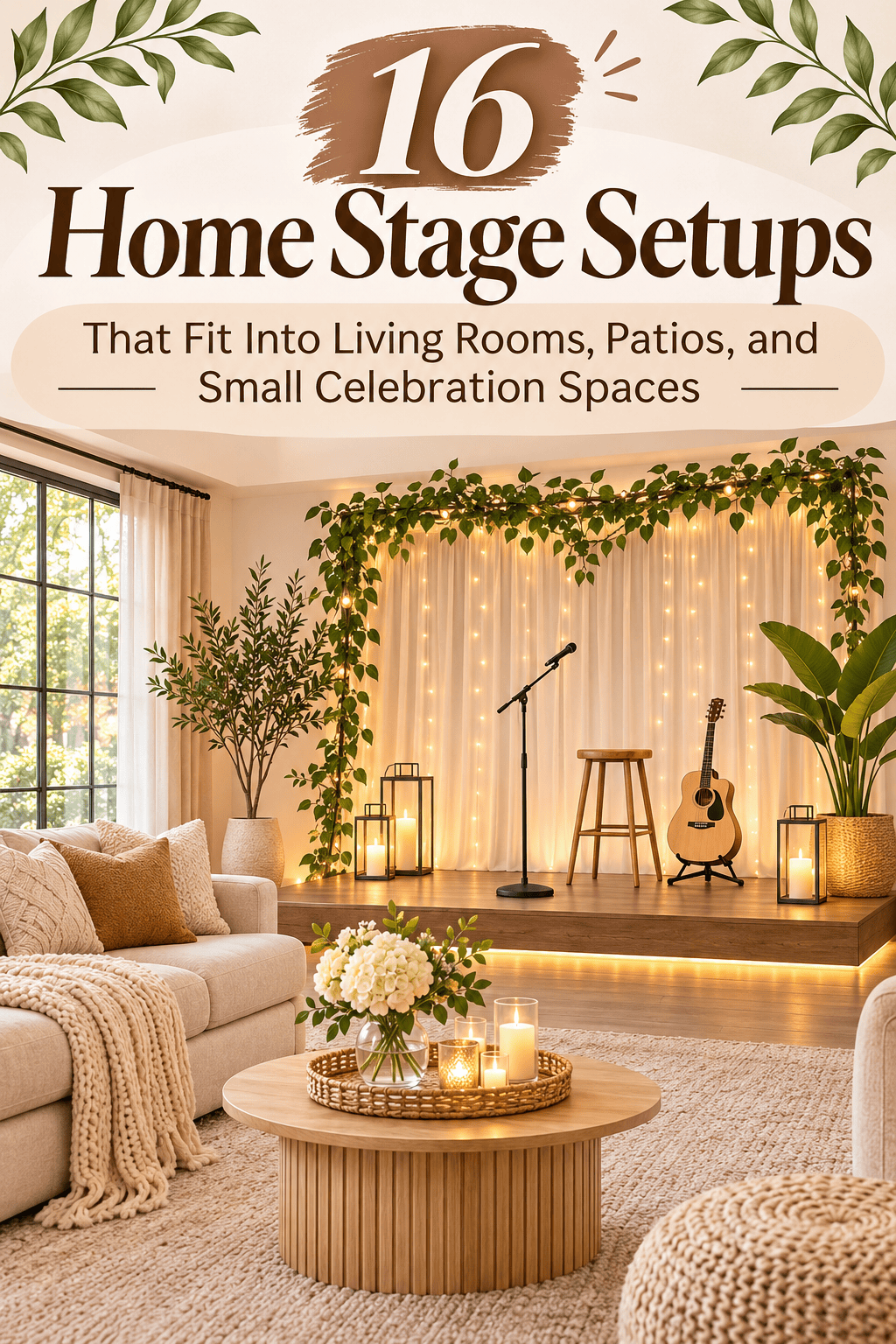

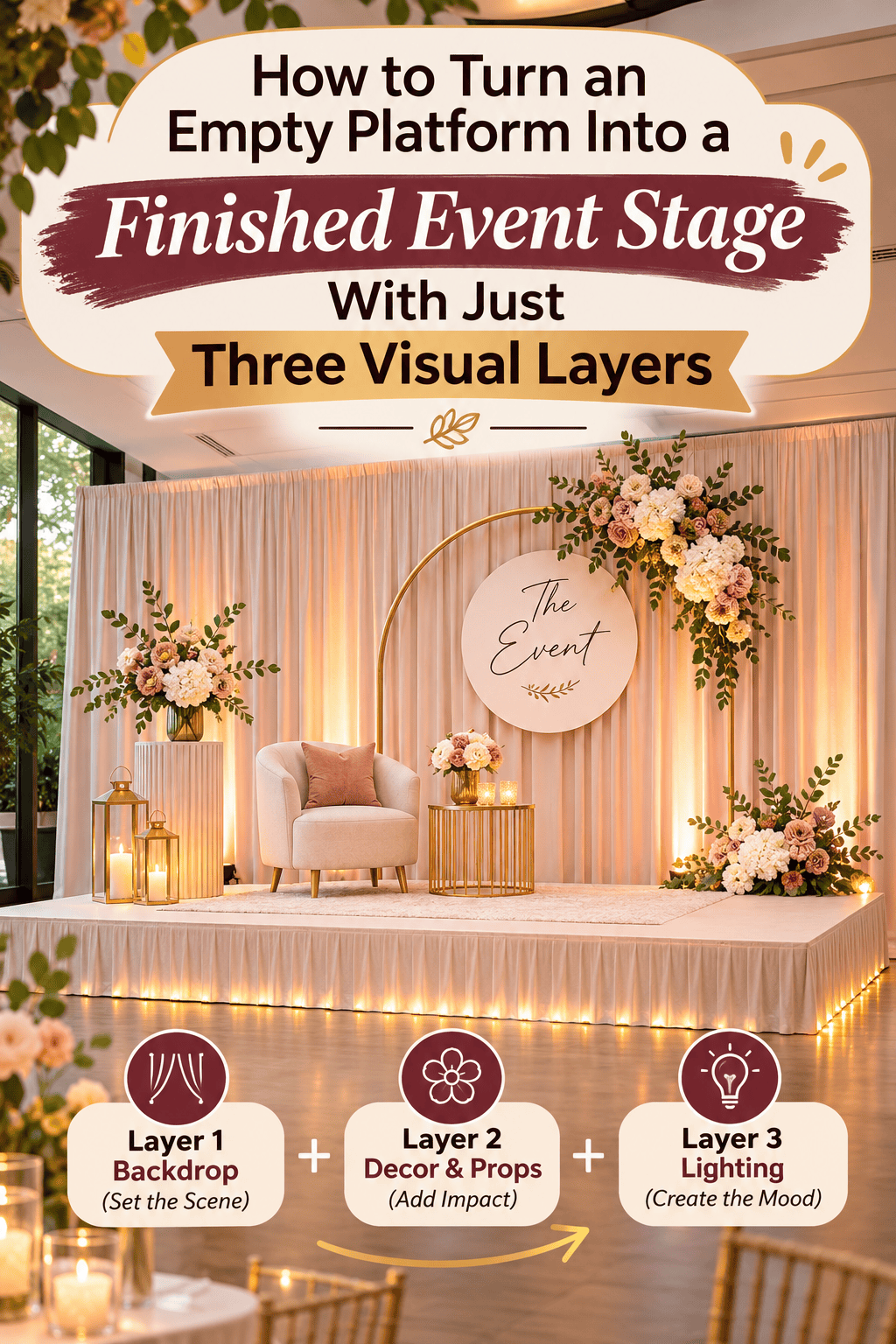
A stage does not need a theater. A rug, a backdrop, and a few lights can turn the corner of a living room into a spot for a birthday song, a kid’s recital, or a family talent show. The same ideas work on a patio or in a garage for small parties. You do not need a big budget or building skills. Fabric, pallets, string lights, and paint do most of the work. If you are searching for simple home stage setups for small spaces, this list gives you 20 ideas to try. Each one is cheap, easy to set up, and easy to put away. Pick one space, measure it, and start with the backdrop.
1. Living Room Rug Stage
The fastest stage is a rug. It marks the spot without moving a single big piece of furniture.
Pick a large rug about five by eight feet. Place it in the open area of the room, facing the sofa. Push side tables to the walls.
Add a non-slip pad underneath so performers do not slide. Cut it an inch smaller than the rug.

Set a floor lamp or two on each side to light the performers. Warm bulbs look best.
Place a stool or a chair in the center for singers or storytellers.
Save money by borrowing a rug from another room or using a bedsheet taped flat to the floor.
Turn the sofa to face the stage. The seating becomes the audience.
Clear the area of cords and small items before anyone performs.
2. Pallet Platform Stage
A raised platform lifts performers so everyone can see. Pallets make a cheap base.
Find two or three pallets stamped with HT, which means heat treated. Sand the top boards smooth. Place them side by side on a flat floor.
Screw a sheet of thin plywood on top so the surface is even. Or lay a thick rug over the slats.

Keep the platform low, about six inches. A low stage is safe for kids.
Paint the sides black or deep blue so they disappear.
Save money by asking stores for free pallets.
Test the stage by jumping on it before the show. Add a few extra screws if it shifts.
Use it on a patio or in a garage. Move it out when the party ends.
3. Bedsheet Backdrop on a Tension Rod
A plain wall looks flat behind a performer. A fabric backdrop adds color and hides clutter.
Pick a bedsheet or plain curtain in navy, black, or a soft color. Iron it. Slide a tension rod through the top hem or use clips.
Mount the rod between two walls or on a freestanding frame made from PVC pipe.

Smooth the fabric so it hangs without wrinkles. Pin the bottom to the floor if it sags.
Add decor with paper stars or fabric flowers pinned to the cloth.
Save money by using a thrifted sheet. Dye it if the color is dull.
Use removable tape if you rent. Avoid nails.
Take the backdrop down and fold it flat when the party ends.
4. Fairy Light Curtain Backdrop
A curtain of lights makes any corner feel like a stage. It also glows well in photos.
Buy a warm white curtain light set, about six feet wide. Hang it from a curtain rod or a row of hooks across the wall.
Plug the lights in or use a battery pack. A timer plug shuts them off automatically.

Place a dark sheet behind the lights so the glow stands out.
Add a stool and a microphone stand in front.
Save money by buying lights at end-of-season sales.
Use outdoor-rated lights on a patio. Keep cords off walkways.
Test the lights before the show. A dead strand is easy to swap.
5. Paper Pom Pom Backdrop
Pom poms add soft color and a party feel. Tissue paper makes them nearly free.
Stack six sheets of tissue paper and fold them like an accordion. Fold the stack in half. Wrap a bit of wire or twine around the center.
Round the ends with scissors. Pull each layer up gently, one at a time. The paper puffs into a ball.

Make ten to fifteen pom poms in three colors. Hang them from the ceiling with fishing line.
Vary the heights from the floor to six feet.
Save money by using tissue paper from gift bags. Save it through the year.
Keep the pom poms away from candles. Paper burns quickly.
Take them down carefully and store them flat in a box.
6. Cardboard Arch Backdrop
An arch frames the performer like a picture. A big cardboard box does the work.
Flatten a large shipping box. Draw an arch about six feet tall with a string tied to a pencil for a smooth curve. Cut it with a box cutter. An adult should handle this step.
Cut a second layer for strength. Glue the two together with craft glue.

Paint the arch in terracotta, sage, or blush. Two coats give an even finish.
Add two cardboard feet so it stands. Tape them to the back.
Save money by using leftover wall paint.
Place a plant on each side for a styled look.
Store the arch behind a door when the show is over.
7. Patio Stage With Outdoor Rug
A patio already has a floor and fresh air. A rug and a few lights complete a stage.
Choose an outdoor rug about five by seven feet. Lay it at one end of the patio.
Hang string lights across the space from post to post. Use outdoor-rated hooks.

Set folding chairs in a half circle facing the rug. Leave a clear aisle.
Place a small table to the side for water and snacks.
Save money by borrowing chairs from neighbors.
Watch the weather. Keep a tarp ready in case of rain.
Check that extension cords are rated for outdoor use. Tape them flat.
8. Garage Stage With Black Curtains
A garage gives you space and a door that opens. Black curtains hide the clutter.
Hang black curtains or sheets along the back wall. Use a rope across the wall with clips, or a tension rod.
Lay a plywood platform or a few pallets in front. Cover it with a rug.

Clear a path for the audience. Use folding chairs or blankets.
Add string lights across the ceiling to warm the room.
Save money by buying black sheets at a discount store.
Keep tools and paint cans out of reach. Cover them with a blanket.
Open the garage door for air in warm weather.
9. Spotlight Using Clip Lamps
Light makes a stage look like a stage. Clip lamps cost a few dollars.
Buy two or three clip-on lamps with metal shades. Use warm LED bulbs. Clip them to a bookshelf, a chair back, or a ladder.
Aim each lamp at the center of the stage. Test the angles with a friend standing in the spot.
Place one lamp on each side and one above if you can. Three lights fill the face evenly.
Keep bulbs cool and away from fabric.
Save money by using desk lamps you already own.
Turn off the room lights during the show. The stage glows.
Tape cords to the floor so no one trips.
10. Balloon Garland Frame
A balloon arch gives a party stage color. A garland strip makes it easy to build.
Buy a balloon arch strip and a pack of balloons in three or four colors. Inflate them in different sizes with a hand pump.
Tie the balloons onto the strip, mixing sizes. Fill gaps with smaller balloons.

Hang the garland across the top of the stage on adhesive hooks or tape.
Keep the palette small. Cream, sage, and gold look calm.
Save money by using paper tape to hold the garland and borrowing a pump.
Keep balloons away from candles.
Pop the leftover balloons after the party. Dispose of pieces safely.
11. Cardboard Spotlight Stars
Gold stars add sparkle to any stage. Cardboard cutouts cost almost nothing.
Draw a star template on a piece of cardboard. Cut out five or six stars in different sizes. Paint them gold with acrylic paint.
Punch a hole at the top of each. Thread fishing line through and hang them at different heights.

Mix in a few paper moons.
Save money by using cereal boxes for the cardboard.
Hang the stars above the performer’s head. Check that they do not block lights.
Store them flat between sheets of paper.
12. Fabric Curtain Wings
Curtain wings frame the stage and hide the area where performers wait. They also feel professional.
Hang two panels of fabric on tension rods or clip rings. Place one on each side of the stage. Leave an opening in the middle.

Pick a color that matches the backdrop. Navy, burgundy, or cream all work.
Make sure the panels reach near the floor. A small gap is fine.
Save money by using thrifted curtains or bedsheets.
Tie back the panels with ribbon between acts.
Keep a small table behind a wing for props.
13. Cardboard Stage Props
Props tell the story of a skit. Cardboard cutouts are cheap and light.
Cut simple shapes from boxes: a tree, a house front, a sun, or a moon. Paint each in bright colors. Glue a cardboard foot to the back so each piece stands.

Keep shapes about three feet tall.
Add a handle on the back with a wooden spoon taped on if performers hold them.
Save money by using leftover paint and old boxes.
Store the props flat behind a sofa.
Let kids paint them. It becomes part of the event.
14. Floor Cushion Audience Corner
A good stage needs a good audience. Cushions and blankets make a cozy seating area.
Gather floor cushions, pillows, and blankets. Arrange them in a half circle facing the stage. Place the smallest viewers in front.
Add a low bench or ottoman at the back for adults.

Place a small side table for snacks.
Save money by using pillows from your beds. Put them back after the show.
Keep an aisle so people can move.
Dim the lights and turn on the stage lights when it is time.
15. Tabletop Puppet Stage
A puppet stage is a small show for a small space. A box is all you need.
Cut a large box open on one side. Cut a window in the front panel for the stage. Paint the box in bold colors.

Add fabric curtains by gluing strips of cloth to the top of the window. Tie them back with ribbon.
Make puppets from socks, felt, and paper. Glue on button eyes.
Set the stage on a table. Kids hide behind and perform.
Save money by using scrap fabric for curtains.
Store the puppets inside the box.
16. Picnic Blanket Stage
A blanket on the grass makes an easy stage. It works in any backyard.
Lay a large blanket on level ground. Add a few cushions for performers to sit on.
Place battery lanterns around the edge for light. Never use open flames near children.

Arrange chairs or blankets in a half circle for the audience.
Save money by using any blanket you own.
Check the grass for rocks and sticks.
Fold it up and take it inside when the show ends.
Conclusion
A home stage can be as simple as a rug and a backdrop or as bold as a pallet platform with lights. Every idea here uses cheap supplies and goes up in an hour. Start with one corner, one backdrop, and one light. Add a few props and some cushions, then invite your audience. Test the lights and the floor before the show, and keep cords out of the way. Pick one setup today, gather your supplies, and set up your first stage.