Skip to content

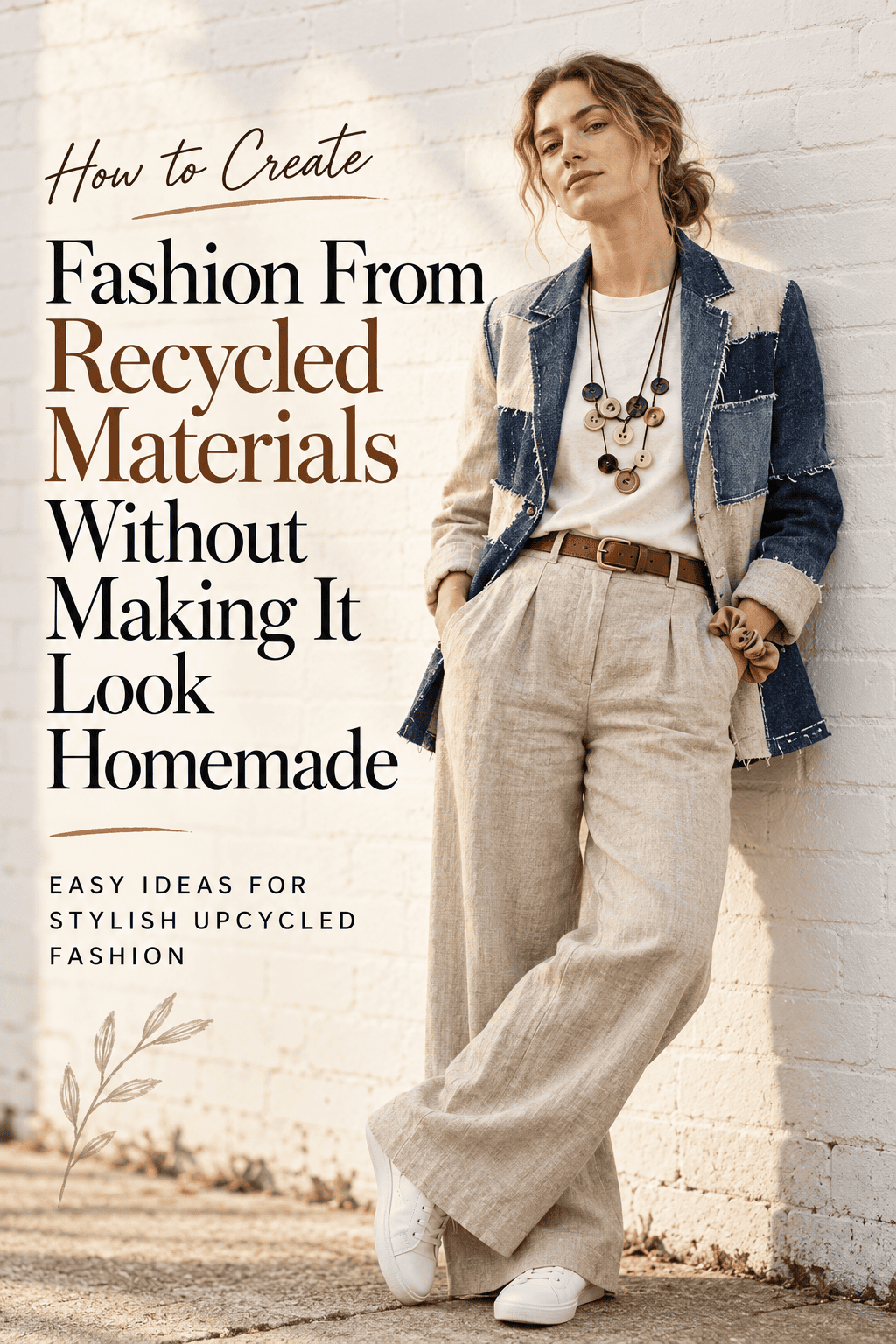
The fashion industry is one of the most polluting on the planet — and the most ironic part is that the solution to a lot of it is already sitting in your wardrobe, your recycling bin, and your local charity shop. Making clothes and accessories from recycled materials isn’t a compromise. Done right, it’s a creative advantage — because the constraints of working with what already exists push you toward decisions that mass-market fashion never makes.

The gap between looking recycled and looking designed is almost entirely about technique, intention, and finish. This guide covers all three.
Start With Material Selection — Not Sewing
The single biggest mistake people make with recycled fashion is grabbing whatever’s available and trying to make something from it. The designers who do this work brilliantly go in the opposite direction: they decide what they want to make first, then source the right recycled materials for it.
Materials that read as intentional rather than improvised:
- Denim from old jeans — structured, versatile, and currently having a serious fashion moment in patchwork and reworked forms
- Men’s suiting fabric — old blazers and trousers yield beautiful suiting-weight wool that costs a fraction of buying it new
- Silk and satin from vintage dresses — the drape of recycled silk is identical to new silk. Nobody can tell.
- Heavy cotton shirting — old dress shirts, especially striped or checked ones, cut apart beautifully into new pieces
- Leather and faux leather from old bags and jackets — offcuts make extraordinary accessories and trims
Materials to approach carefully:
- Anything pilled, thinned, or structurally weak — recycled fashion fails when the material fails
- Mismatched textures that fight each other rather than complement
Wash, press, and assess every piece of fabric before deciding to use it. Condition matters.
The Techniques That Separate Designed From DIY

Technique is everything. The same recycled denim can look like a school project or a designer piece depending entirely on how it’s handled.
The non-negotiables:
- Press every seam. An iron is the difference between homemade and handmade. Every single seam, pressed open or to one side after sewing, flattens and sets the construction so it reads as intentional.
- Finish your edges. Raw fraying edges are a choice only when they’re a deliberate design decision — not when they’re happening by accident. A zigzag stitch, bound edge, or French seam instantly elevates any construction.
- Match your thread. Contrasting thread is a design statement. Non-matching thread is a mistake. Know which one you’re doing before you sew.
- Cut with proper fabric scissors, not kitchen scissors. The quality of a cut edge shows in the finished piece more than almost any other single factor.
Techniques that make recycled materials look designed:
- Patchwork with intention — not random scraps, but a considered colour palette with deliberate seam placement
- Structural facing and interfacing — iron-on interfacing added to collars, cuffs, and waistbands gives recycled fabric the stiffness and body that makes it look like quality new material
- Clean topstitching — a single row of topstitching in matching thread around a collar or hem is the mark of a finished garment, not a craft project
Accessories Are Your Fastest Win

If garment construction feels like too much of a commitment right now, start with accessories. They require less material, less time, and the margin for error is smaller — but so is the gap between beginner and polished.
Recycled material accessories that look genuinely high-end:
- Button jewellery — vintage buttons threaded on waxed cord or wire make necklaces and bracelets that look completely intentional. Sort by colour family for maximum impact.
- Leather belt strips — a straight cut from an old leather bag, punched with holes and fitted with a vintage buckle, makes a belt that looks custom-made. Because it is.
- Fabric hair accessories — a rectangle of vintage silk hemmed cleanly on all four edges becomes a hair scarf. A strip of cotton shirting gathered and stitched into a loop becomes a scrunchie that costs nothing and looks expensive.
- Patchwork tote — leftover fabric panels sewn into a structured tote with clean edges and proper handles reads as a design choice, not a leftover project.
The key with all of these: clean edges, good hardware, and a decisive colour palette.
Colour and Palette Discipline
This is the invisible skill that makes recycled fashion collections look cohesive rather than random — and it’s entirely learnable.
How to build a recycled palette that looks designed:
- Pick two to three tones maximum for any single piece or outfit
- Neutrals anchor everything — undyed natural fabrics, raw denim, and natural leather work with almost any accent colour
- Treat pattern as a neutral — a classic stripe or small check reads as a base tone, not a statement
- Let one material carry visual interest and keep everything else quiet

The same principle that guides any good outfit applies here: when everything is interesting, nothing is.
The Finishing Mindset
Here’s the honest truth about recycled fashion: the finish is what people actually see. Not where the material came from. Not the backstory. The hem, the seam, the press, the fit — that’s what registers visually.
The finishing checklist for every recycled piece:
- All seams pressed flat with a hot iron
- All raw edges finished or intentionally treated
- All loose threads cut, not pulled
- Fit adjusted before final stitching — a well-fitting piece in recycled fabric looks better than a poorly fitting piece in new fabric, every single time
- Wear it with confidence — nothing reads as homemade faster than wearing it apologetically
Save this guide for your next wardrobe audit — go through everything you own with new eyes and ask what it could become rather than whether to keep it. The most interesting fashion being made right now isn’t happening in factories. It’s happening in people’s spare rooms, with scissors and old denim and the audacity to make something new.