Skip to content

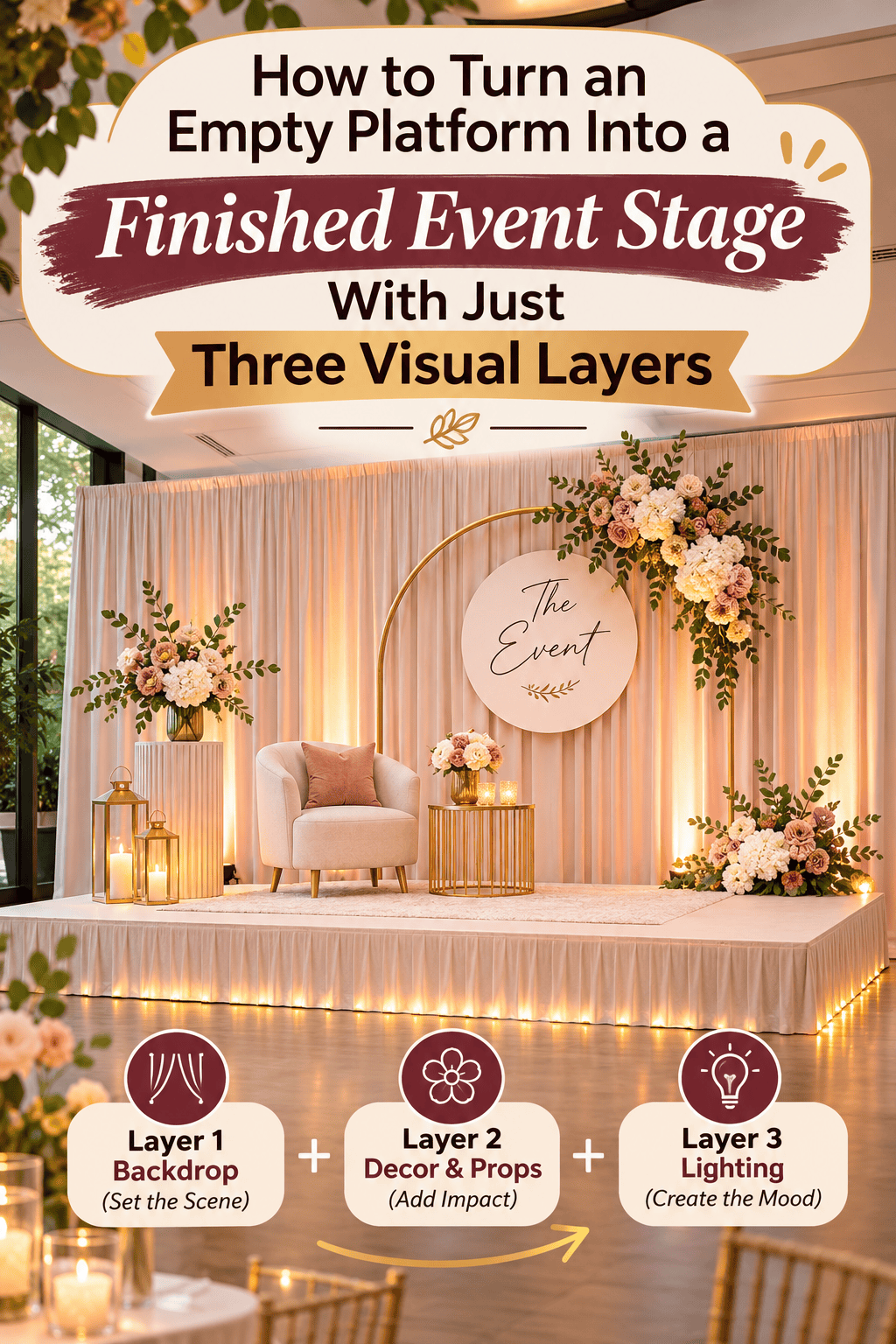
A bare platform under harsh house lights looks like a loading dock. The same platform, dressed with a little planning, can look like the centerpiece of a premium event. The secret isn’t a big budget. It’s layering.
Think of your stage as a painting with three depths: a backdrop, a midground, and a foreground. Get those three right, and any empty riser becomes a finished set. Let’s build it.

Why Three Layers Work
Flat stages look unfinished. Depth makes them feel designed.
- Layer 1, the backdrop: sets the mood and frames the speaker or performers
- Layer 2, the midground: adds structure, texture, and visual interest
- Layer 3, the foreground: polishes the edge and connects the stage to the audience
Each layer should be different in height, texture, or material. That contrast is what creates depth.
Tip: Stand at the back of the room before you start. Design for the audience’s view, not your own.
Start With a Clear Plan
A few quick decisions save hours on event day.
- Pick a theme or mood: romantic, modern, rustic, festive, or corporate
- Choose two main colors and one accent
- Measure the platform’s width, depth, and height
- Note where speakers, bands, or presenters will stand
- Check power outlets for lighting
Keep a clear zone in the center so the main action is never blocked.
Layer 1: Build the Backdrop
The backdrop is the largest visual and sets everything in motion.
- Draped fabric: sheer or velvet panels in a solid color feel instantly elegant
- Flower or greenery wall: faux panels are budget-friendly and reusable
- Pipe-and-drape: a classic, clean option for conferences
- Wooden pallets or slats: a warm, rustic choice
- Large arch or frame: wrap in greenery or fairy lights for a statement piece
Hang it a few feet behind the platform edge so lighting can wash across it.
Pro tip: Steam or iron fabric before hanging. Wrinkles are the first thing a camera catches.

Layer 2: Add the Midground
This layer gives the stage dimension. It sits between the backdrop and the front edge.
- Vary heights: use plinths, tall plants, stools, or stacked crates.
- Add texture: mix wood, metal, fabric, and greenery.
- Use odd numbers: groups of three or five look balanced.
- Keep sightlines open: nothing taller than chest height near the speaker.
Great midground ideas include potted palms, tall candle clusters, floral stands, branded banners, and soft furniture for panel talks.
Layer 3: Polish the Foreground
The foreground ties the stage to the audience.
- Dress the front edge: a skirt, fabric swag, or low floral garland hides the platform’s raw side
- Add stair details: a small runner or flanking greenery keeps access safe and neat
- Set a focal prop: a lectern, a small table, or a pair of armchairs
- Place low lights or candles: soft glow along the front draws the eye
Keep this layer low and tidy. It should frame the stage, not block it.

Light the Layers Separately
Lighting is what makes three layers read as three layers.
- Backdrop: wash with warm or colored uplights to add depth
- Midground: use spotlights or lamps to highlight key pieces
- Foreground: add soft, low light along the edge
- Speaker or performer: use a gentle front light, slightly above eye level
Avoid pointing bright light straight at the audience. Dimmers help you fine-tune the mood.
Choose a Cohesive Palette
A tight color scheme makes the stage look professional.
- Elegant: ivory, gold, and deep green
- Modern: charcoal, white, and a bold accent color
- Rustic: warm wood, cream, and soft sage
- Festive: burgundy, gold, and evergreen
- Playful: pastel shades with white and metallic touches
Repeat each color across all three layers so the stage feels unified.

Quick Setup Checklist
- Measure and sketch your layout
- Hang the backdrop first
- Place midground pieces next
- Dress the front edge last
- Set lighting and test it
- Walk the stage from every angle
- Secure cables, stands, and décor so nothing is a tripping hazard
Common Mistakes to Avoid
- Overcrowding the platform and leaving no room to move
- Using too many colors or patterns
- Forgetting the platform’s front and sides
- Placing tall pieces where they block the audience’s view
- Skipping a test run with lights on
Final Thoughts
Three layers are all it takes to turn an empty platform into a finished stage: a strong backdrop, a textured midground, and a polished foreground. Plan the palette, light each layer, and step back to check the view from the seats. The difference will be dramatic.
Loved these ideas? Save this post to your Event Styling board and dress your next stage with three simple layers!